What does it mean to be a pain specialist?
Currently in South Africa, the specialised field of pain medicine, is not yet recognised by the Health Professions Council of South Africa. There is currently no registered fellowship training programme within South Africa. To obtain the international qualification, South African doctors who meet the eligibility criteria of the World Institute of Pain, are required to complete the Fellowship in Interventional Pain Practice (FIPP) examination.
The Fellowship in Interventional Pain Practice (FIPP) is a global certification by the World Institute of Pain (WIP) demonstrating a physician’s advanced knowledge, technical expertise and clinical excellence in interventional pain management. It involves a thorough examination and confirmation of a pain physician’s ability to perform a wide range of fluoroscopy- or ultrasound-guided interventional procedures for the management of chronic pain. These include nerve blocks, radiofrequency ablation, spinal interventions and neuromodulation techniques.
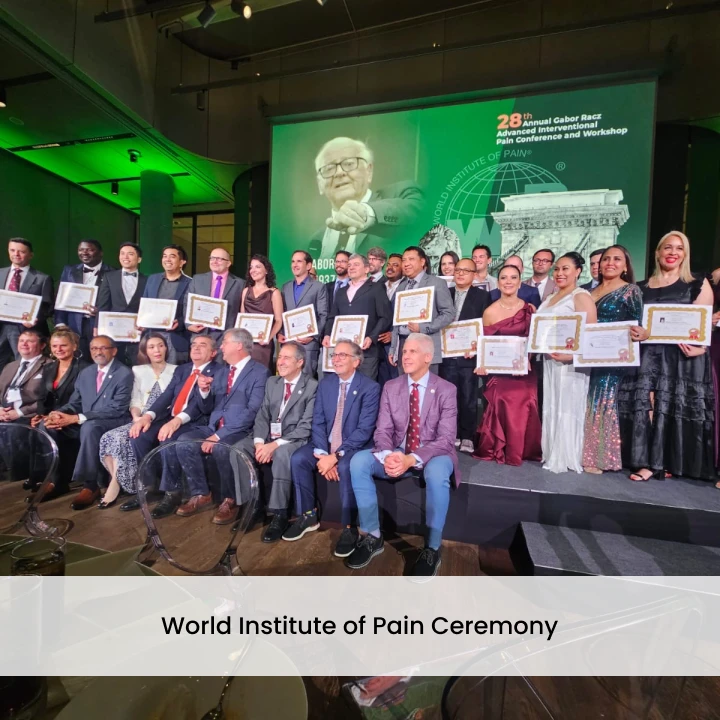
The World Institute of Pain was founded in 1993 as a worldwide organisation that aims to promote the best practice of pain medicine for the 21st century. The World Institute of Pain and its Board of Examination administer a psychometrically developed and practice-related Interventional Examination in the field of Pain Medicine to qualified candidates.
A list of certified physicians will be available to medical organisations and the public. I strongly advise any patient seeking assistance from a pain specialist check that list to ensure that their physician has the accreditation/certification.
I am extremely proud of the fact that I am one of only four female South African medical doctors to have successfully completed my FIPP examination. On the African continent, we have a grand total of 51 FIPP graduates, 18 of which are from South Africa. Worldwide, female pain physicians only represent 14% of FIPP associates, according to World Institute of Pain data. Although there are major advances in pain medicine and interventional procedures, there remains a disparity in the number of female pain physicians.
There are obvious differences between the genders in terms of how pain is expressed, perceived and described as well as preferred coping mechanisms.
A pain physician should lead with empathy and have the ability to connect personally with their patient, as this has been associated with better treatment outcomes. It is well known that many patients feel more comfortable when discussing personal issues with a female physician.
According to Doshi and Bicket, female physicians tend to spend more time on average with each patient which has been shown to improve patient satisfaction and retention.
Furthermore, female physicians tend to have fewer litigation issues and have been shown to follow evidence-based practice guidelines more often than their male counterparts.
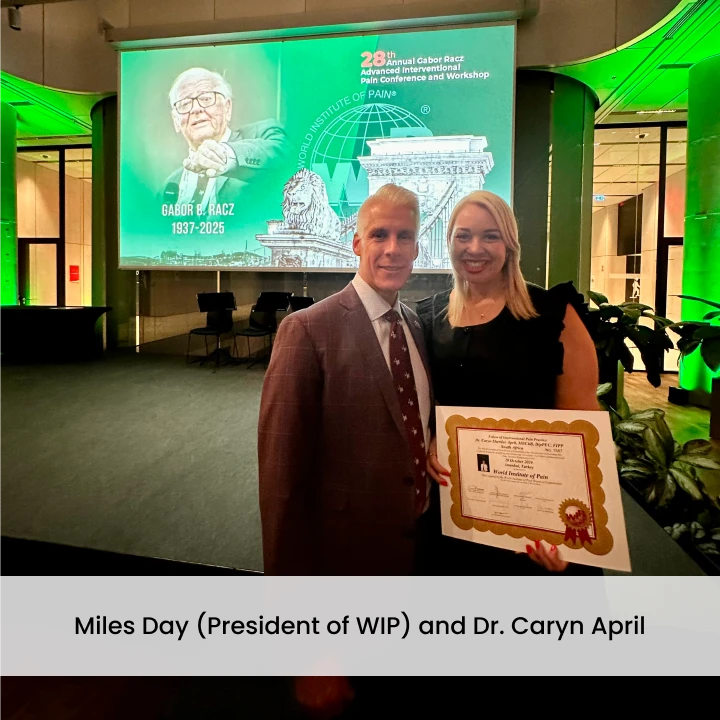
Dr Monique Steegers (Chair- Board of Examiners, WIP) and Dr. Caryn April
Female patients tend to feel more comfortable when discussing personal issues and diagnoses with physicians that are women themselves.1 Additionally, there are many other aspects of women physicians that can lend themselves to an improvement in the overall quality of pain medicine and treatment outcomes for its patients.
For example, female physicians tend to spend more time on average with each patient which has been shown to improve patient satisfaction and retention. Furthermore, female physicians tend to have fewer litigation issues and have been shown to follow evidence-based practice guidelines more often than their male counterparts. I hope to inspire and train more female pain physicians in South Africa.
Why is this so important to me? Women form most of the chronic pain population. Pain itself is a subjective experience and often one which is difficult to describe. Every patient deserves to be listened to and feel understood by their physician. This is the bare minimum.
References:
Doshi TL, Bicket MC. Why aren’t there more female pain medicine physicians?
Reg Anesth Pain Med. 2018;43(5):516–20.